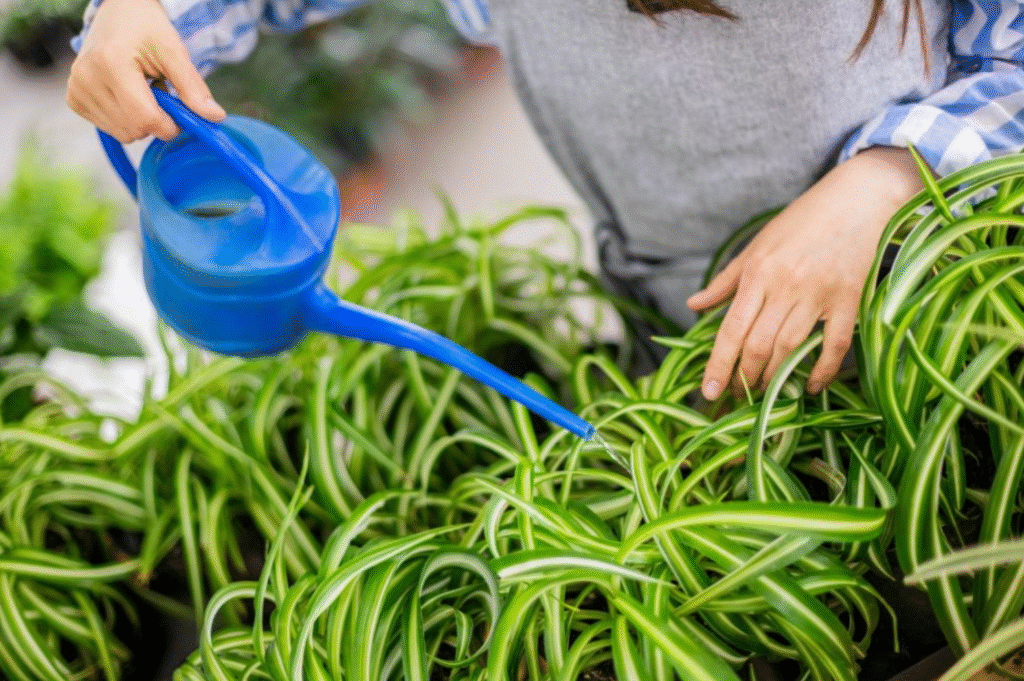
Spider plants (Chlorophytum comosum) are among the easiest and most forgiving indoor plants, making them a favorite for beginners and experts alike. But even the hardiest houseplants need proper care and watering is one of the most crucial parts of keeping your spider plant happy and thriving.
In this article, we’ll guide you through when to water a spider plant, what affects its watering needs, and how to avoid common mistakes. Whether you’re dealing with brown tips or slow growth, understanding spider plant watering can make all the difference.
How Often Should I Water a Spider Plant Indoors?
The frequency of watering depends on a few factors (light, humidity, pot size, and time of year). As a general rule, spider plants should be watered once every 7–10 days when grown indoors. However, it’s always best to check the soil before watering.
Here’s how to know it’s time to water:
- Stick your finger into the soil about an inch deep.
- If it feels dry, it’s time to water.
- If it still feels moist, wait a few more days.
Spider plants prefer a slightly dry environment over soggy soil. They store moisture in their tuberous roots, which makes them drought-tolerant. So, it’s safer to underwater than overwater.
What Are the Signs of Overwatering a Spider Plant?
One of the most common mistakes plant owners make is giving their spider plant too much water. Overwatering can lead to root rot, a silent killer that slowly damages the plant from below the surface.
Here are the warning signs of overwatering:
- Yellowing Leaves: Leaves may turn yellow and feel limp or mushy.
- Wilting Despite Wet Soil: A plant wilting even when the soil is wet is a classic sign of root rot.
- Brown or Black Roots: If you unpot the plant and see dark, mushy roots, it’s time to trim and repot.
- Musty Smell: Overwatered soil may smell like mildew or mold.
To prevent overwatering, always make sure your spider plant is in a pot with good drainage holes, and avoid letting it sit in standing water.
Does a Spider Plant Need More Water in Summer or Winter?
Spider plants’ watering needs change with the seasons. Understanding this cycle helps prevent stress and root problems.
In Summer:
- Plants grow actively, using more water.
- Soil dries out faster due to heat and sunlight.
- You may need to water every 5–7 days, depending on your indoor conditions.
In Winter:
- Growth slows down or becomes dormant.
- Soil stays moist longer, and overwatering becomes more dangerous.
- Water every 10–14 days, or when the top 1–2 inches of soil are dry.
Tip: Always check soil moisture before watering, regardless of the season. Using a moisture meter can be a helpful tool for accurate readings.
Can I Use Tap Water for My Spider Plant?
Yes, you can use tap water for your spider plant, but there’s a catch.
Many municipal water supplies contain chlorine, fluoride, and other minerals that can accumulate in the soil and cause brown leaf tips or stunt growth over time.
Better water options include:
- Filtered water
- Rainwater
- Letting tap water sit for 24 hours to allow chlorine to evaporate
If you notice brown tips even with correct watering, it may be due to chemical buildup from tap water. In that case, consider switching to filtered water and flush the soil monthly to wash out salts and minerals.
How Do Humidity and Light Affect Spider Plant Watering Needs?
Both humidity and light levels directly impact how often your spider plant needs water.
Light:
Spider plants love bright, indirect light. The more light they get, the faster the soil dries out. In a sunny room, you may need to water more often.
In low-light conditions:
- Water less frequently
- Growth may slow down, so be cautious not to overwater
Avoid direct sunlight, which can scorch leaves and cause rapid water loss.
Humidity:
Spider plants thrive in moderate to high humidity (40–60%). In dry indoor air, especially with heating or air conditioning, water evaporates faster, and the plant may need more frequent watering.
To maintain humidity:
- Mist the leaves occasionally
- Place a water tray nearby
- Use a humidifier during dry seasons
Proper humidity reduces the risk of leaf tips browning and supports healthy foliage.
Bonus Tips for Watering Spider Plants
Here are a few extra pointers to make your watering routine even more effective:
- Use room-temperature water: Cold water can shock the roots.
- Water thoroughly but not frequently: Soak the soil until water drains out, then let it dry before watering again.
- Repot every 1–2 years: Fresh soil helps drainage and root health.
- Use well-draining soil: A mix of peat moss, perlite, and potting soil works well.
- Check for rootbound plants: If roots are circling the pot, they might prevent proper absorption, time to repot.
Final Thoughts
Watering a spider plant isn’t a one-size-fits-all formula. It depends on your indoor environment, light, temperature, and season. The key is to observe your plant (check the soil, watch the leaves, and adjust as needed).
By following this guide, you’ll not only avoid the most common watering mistakes but also help your spider plant grow greener, bushier, and stronger. And as your plant thrives, so will your confidence in plant care!