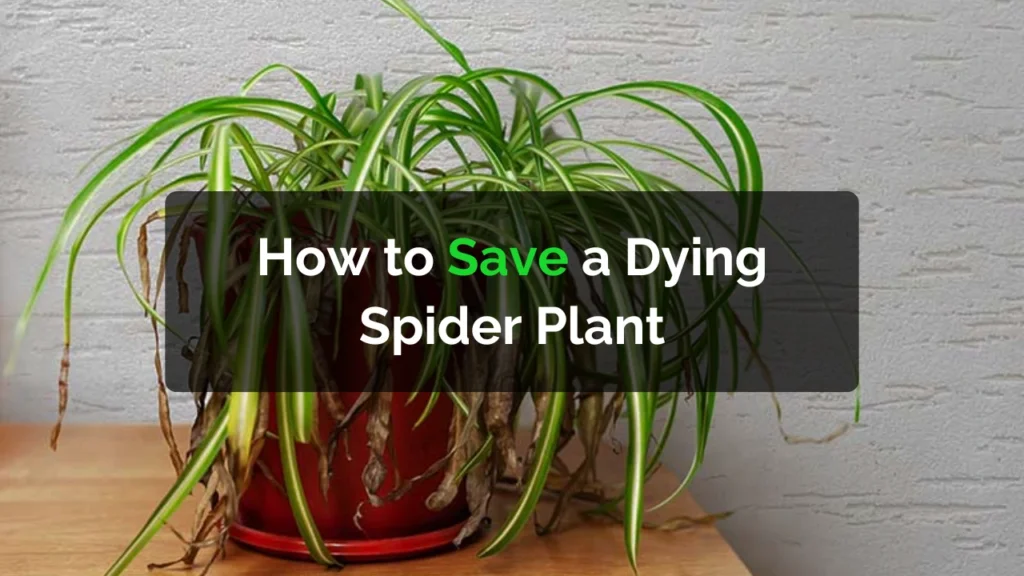
Spider plants (Chlorophytum comosum) are known as one of the easiest houseplants to care for. They grow fast, produce cute baby plantlets, and brighten up any space. But sometimes even the toughest plants can start looking unhealthy. If your spider plant has drooping leaves, brown tips, or just seems weak, don’t worry. With the right care, you can often bring it back to life.
Here is a simple step-by-step guide to help you save a dying spider plant.
1. Check Your Watering
The biggest reason spider plants struggle is watering mistakes.
- Too much water can rot the roots and turn leaves yellow.
- Too little water leaves the plant dry and crispy.
What to do:
Water your spider plant only when the top inch of soil feels dry. Make sure the pot has holes at the bottom so extra water can drain out. If the roots have been sitting in soggy soil, gently repot the plant into fresh soil.
2. Give It the Right Light
Spider plants love bright but indirect light. Direct sun can burn the leaves, while too much shade makes them weak and pale.
What to do:
Keep your plant near a bright window with filtered light. A sheer curtain works perfectly. If your home is very dark, you can use a simple grow light.
3. Trim Away Dead Leaves
Once a leaf turns brown or yellow, it will not turn green again. Keeping damaged leaves drains the plant’s energy.
What to do:
Use clean scissors to cut off dead or dying leaves at the base. If only the tips are brown, trim just the brown part and leave the rest of the leaf.
4. Repot if the Roots Are Crowded
Spider plants grow quickly and often get root-bound, meaning the roots circle tightly inside the pot. This can stop growth and make the plant look unhealthy.
What to do:
Check the roots by sliding the plant out of its pot. If they look tangled and crowded, move the plant to a slightly bigger pot and refresh the soil.
5. Adjust Humidity and Temperature
Spider plants prefer moderate humidity and temperatures between 60 to 80°F (16 to 27°C). Very dry air from heaters or air conditioners can damage the leaves.
What to do:
Mist the leaves lightly a few times a week or place a small tray of water and pebbles under the pot. This adds gentle humidity around the plant. Keep it away from cold drafts or heating vents.
6. Feed It Lightly
If your plant looks pale or is not growing well, it might need a little food. But too much fertilizer can do more harm than good.
What to do:
Use a balanced liquid fertilizer once a month during the growing season (spring and summer). Skip fertilizer in winter when growth naturally slows down.
7. Check for Pests
Although spider plants are usually strong, they can sometimes get tiny pests like spider mites, aphids, or mealybugs.
What to do:
Look under the leaves for small bugs or sticky residue. If you find pests, wipe the leaves with a damp cloth or spray them with neem oil or a mild insecticidal soap.
FAQs
Why are the tips of my spider plant turning brown?
This usually happens because of low humidity, too much fertilizer, or irregular watering. Trim the tips and adjust care.
Can a spider plant recover from root rot?
Yes, if you act quickly. Cut away the rotting roots, repot the plant in fresh soil, and water carefully.
How often should I water my spider plant?
Usually once a week, but always check the soil first. Water only when the top feels dry.
Should I cut off dying leaves?
Yes. Removing unhealthy leaves helps the plant use its energy to grow new healthy ones.
Can spider plants survive in low light?
They can survive in low light but won’t thrive. For the best results, give them bright, indirect light.
Final Thoughts
A spider plant that looks like it’s dying can almost always be saved. Focus on fixing the basics: water correctly, give it proper light, trim off damaged leaves, and repot if needed. With a little patience, your spider plant will bounce back and continue to grow for years.
References
- University of Florida IFAS Extension. Spider Plant (Chlorophytum comosum) Care. Available at: https://gardeningsolutions.ifas.ufl.edu/plants/houseplants/spider-plant
- Royal Horticultural Society. How to Grow Spider Plants. Available at: https://www.rhs.org.uk/plants/spider-plants/growing-guide
- Royal Horticultural Society. Chlorophytum comosum Plant Details. Available at: https://www.rhs.org.uk/plants/3761/chlorophytum-comosum/details
- University of Wisconsin-Madison Extension. Spider Plant (Chlorophytum comosum). Available at: https://hort.extension.wisc.edu/articles/spider-plant-chlorophytum-comosum
- Missouri Botanical Garden. Chlorophytum comosum. Available at: https://www.missouribotanicalgarden.org/PlantFinder/PlantFinderDetails.aspx?kempercode=b547
- BBC Gardeners’ World. How to Care for a Spider Plant. Available at: https://www.gardenersworld.com/house-plants/spider-plant-care