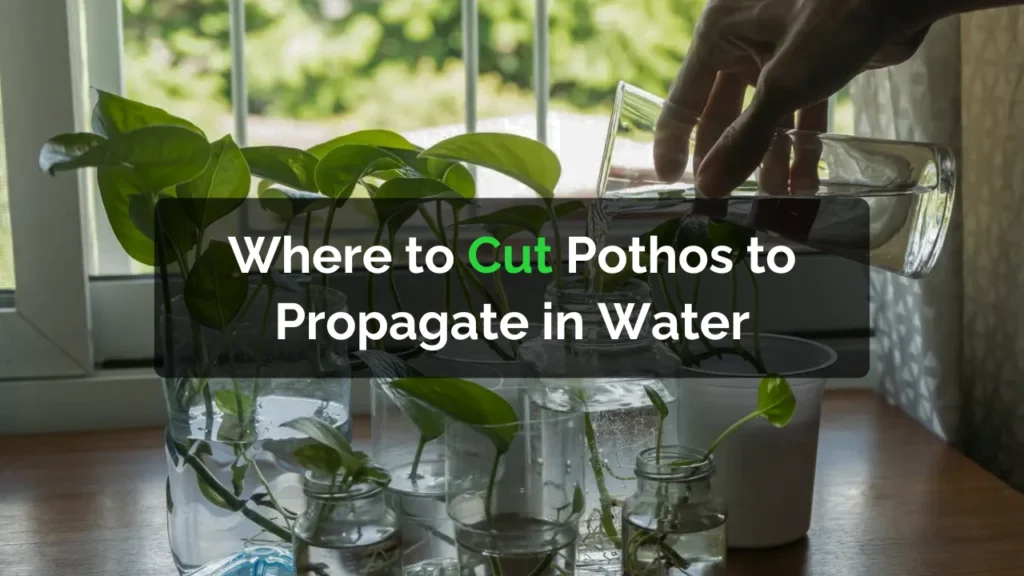
Pothos is one of the easiest houseplants to propagate, making it a favorite among indoor plant lovers. If you’re looking to multiply your collection, propagating pothos in water is an excellent and rewarding method. But to do it right, you need to know exactly where to cut the pothos vine. The right cut ensures that your new plant grows strong, healthy roots.
Understanding the Pothos Node
Before making any cut, it’s important to understand what a node is. The node is the small bump or joint on the stem where leaves and aerial roots grow. These nodes are where new roots will form during water propagation.
If you cut your pothos above a node, the cutting will not root. Always include at least one node in each cutting. Without it, your propagation attempt will fail.
Step-by-Step: Where and How to Cut Pothos for Propagation
1. Choose a healthy vine
Select a mature, healthy vine with vibrant green leaves and visible nodes. Avoid stems that look thin, yellow, or damaged.
2. Locate the node
Find a section of the vine with a leaf and a visible node right below it. This is the ideal place to make your cut.
3. Make the cut below the node
Using clean, sharp scissors or pruning shears, cut about a quarter inch below the node. This ensures the node remains attached to the cutting and can produce roots.
4. Trim the lower leaves
Remove any leaves that would sit below the waterline once placed in a jar. Leaves submerged in water tend to rot and affect root growth.
5. Place the cutting in water
Fill a glass jar or vase with room-temperature water and place your pothos cutting so the node is fully submerged. Keep the leaves above the surface.
6. Provide proper conditions
Place the jar in bright, indirect sunlight. Change the water every few days to prevent bacteria buildup and ensure a fresh supply of oxygen.
7. Wait for roots to grow
Roots typically start appearing within one to two weeks. Once they reach about two to three inches in length, you can transfer the cutting to soil or keep growing it in water.
Tips for Successful Water Propagation
- Use filtered or rainwater if possible, as tap water can contain chlorine that slows root growth.
- Keep multiple cuttings together in one jar to create a fuller, bushier plant later.
- Be patient. Some cuttings root faster than others depending on temperature and light conditions.
- Avoid direct sunlight, as it can overheat the water and harm new roots.
When to Transfer Pothos from Water to Soil
Once the roots are about two inches long, the cutting is strong enough to plant in soil. Use a well-draining potting mix and keep it moist during the transition period. Gradually adjust watering frequency as the plant establishes itself in soil.
Common Mistakes to Avoid
- Cutting above the node instead of below it
- Leaving leaves underwater, which causes rotting
- Not changing the water regularly
- Using weak or diseased vines for propagation
FAQs
Can I propagate pothos without a node?
No, pothos cuttings without a node cannot grow roots. The node is essential for new root growth.
How long does it take for pothos to root in water?
Typically, you’ll see roots forming within one to two weeks, depending on the environment.
Can I leave pothos in water forever?
Yes, pothos can live in water long-term if you replace the water regularly and add nutrients occasionally.
How many nodes should a cutting have?
Ideally, each cutting should have at least one or two nodes to ensure strong root development.
What’s the best time of year to propagate pothos?
Spring and early summer are ideal because the plant is actively growing during this period.
Final Thoughts
Knowing exactly where to cut pothos to propagate in water makes all the difference between success and failure. Always include a healthy node in your cutting, keep the water clean, and provide good light. With just a little patience and care, you’ll soon have thriving new pothos plants to enjoy or share.