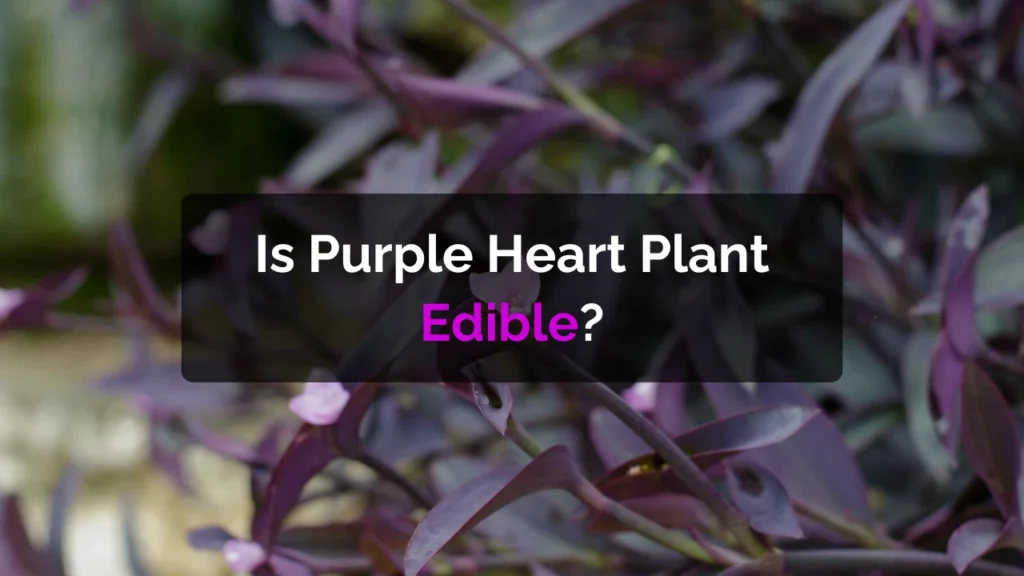
The Purple Heart plant, also known as Tradescantia pallida, is a favorite among gardeners for its deep purple leaves and easy care. It is often used as a decorative houseplant or outdoor ground cover. However, a common question people ask is whether the Purple Heart plant is edible.
The simple answer is no. The Purple Heart plant is not edible and should not be consumed by humans or pets. While it is not highly poisonous, it can still cause mild irritation or discomfort if eaten or handled carelessly.
Why the Purple Heart Plant Is Not Edible
The Purple Heart plant contains sap that can irritate the skin or mouth. If swallowed, it may cause a mild stomach upset or throat irritation. Because of these effects, it is not suitable for eating or cooking.
When handling the plant, it is best to wear gloves to avoid direct contact with the sap, especially if you have sensitive skin. Washing your hands after pruning or touching the plant is always a good practice.
Is the Purple Heart Plant Toxic to Humans
The Purple Heart plant is considered mildly toxic to humans. If someone eats a part of it, they might feel nausea, stomach discomfort, or throat irritation. Some people may also notice slight redness or itching on their hands after touching the plant.
Although it is not deadly, it is best to keep the plant away from children who may accidentally chew on the leaves.
Is the Purple Heart Plant Toxic to Pets
Yes, the Purple Heart plant can be harmful to pets like cats and dogs. If a pet chews on its leaves or stems, it may experience vomiting, drooling, or skin irritation. Pet owners should place the plant in a location where animals cannot reach it.
Safe Ways to Enjoy the Purple Heart Plant
Even though it is not edible, the Purple Heart plant offers many benefits as a decorative plant. Its purple leaves bring color and life to gardens, balconies, and indoor spaces. It grows easily with little care and looks beautiful in hanging pots or as ground cover in warm climates.
The Purple Heart plant can also help improve indoor air quality, making it a great addition to your home decor.
Common Misunderstandings About Its Edibility
Some people confuse the Purple Heart plant with other types of Tradescantia that have edible flowers. However, Tradescantia pallida, the Purple Heart variety, is strictly ornamental and not meant for eating. Always make sure to identify the plant correctly before deciding if it is safe for consumption.
Final Thoughts
The Purple Heart plant is an attractive and hardy plant that adds beauty to any space. However, it is not safe to eat and can cause irritation if handled or ingested. It is best enjoyed as a decorative plant rather than a food source. Keep it out of reach of pets and children, and handle it carefully to avoid skin irritation.
FAQs
Can you eat Purple Heart leaves?
No, the leaves of the Purple Heart plant are not edible and may cause irritation or stomach upset if eaten.
Is the Purple Heart plant toxic to touch?
Its sap can cause mild skin irritation, especially for people with sensitive skin. Wearing gloves is recommended when handling it.
Can pets eat the Purple Heart plant?
No, it can cause vomiting or irritation in pets like cats and dogs. Keep it away from them.
Are there edible plants that look like the Purple Heart?
Yes, some species of Tradescantia, like the spiderwort family, have edible flowers, but they are not the same as the Purple Heart plant.
What should I do if my child or pet eats part of the Purple Heart plant?
Rinse their mouth and contact a doctor or veterinarian for guidance, especially if any symptoms appear.