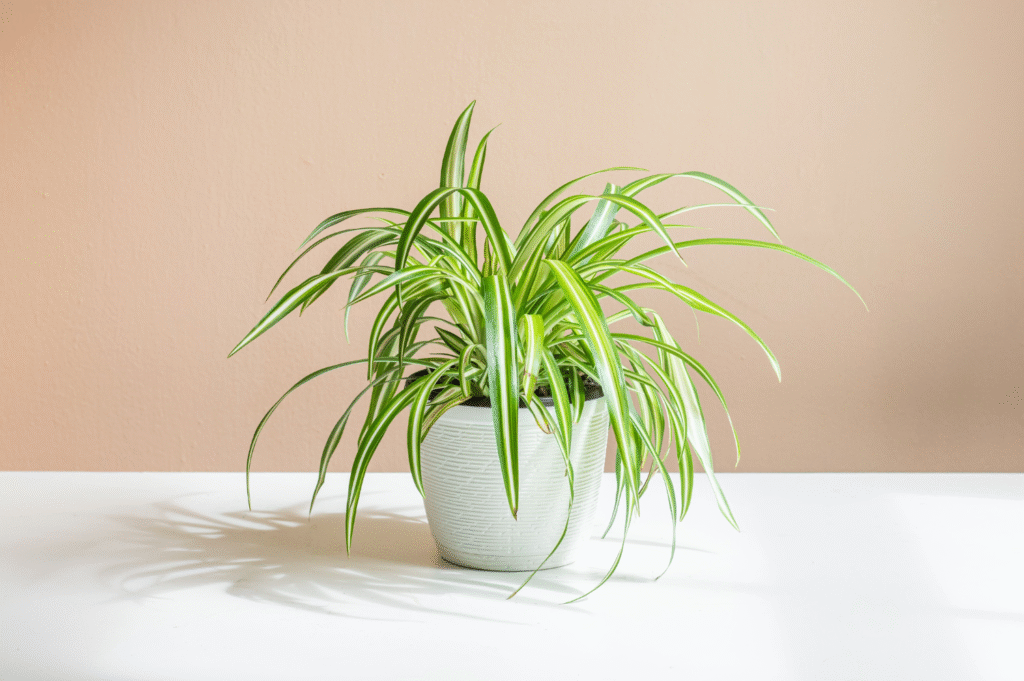
Spider plants (Chlorophytum comosum) are one of the easiest indoor plants to grow. Their arching leaves and cute baby offshoots make them a favorite for beginners and experienced plant lovers alike. But even low-maintenance plants need proper care to stay lush and vibrant.
In this complete guide, you’ll learn how to look after your spider plant, from watering and feeding to pruning, lighting, and repotting.
What Are the Basic Care Requirements for Spider Plants?
Spider plants adapt well to most home environments, but they do best when their basic needs are met:
- Temperature: They grow well in average indoor temperatures between 60–75°F (15–24°C).
- Humidity: They appreciate a moderate level of humidity. If your home is dry, lightly mist the leaves or place a pebble tray with water beneath the pot.
- Soil: Use light, well-draining potting soil. A peat-based mix with perlite is ideal.
- Pot: Choose a container with drainage holes so water doesn’t accumulate around the roots.
Regularly check for pests like spider mites or aphids, as these can damage your plant if not addressed early.
How Often Should You Water a Spider Plant?
Watering correctly is key to keeping spider plants healthy:
- Water when needed: Allow the top 1–2 inches of soil to dry before watering again. This usually means once every 7–10 days.
- Adjust by season: During winter, water less often as the plant’s growth slows down.
- Use good water: Spider plants don’t like chemicals such as chlorine and fluoride. Use filtered, distilled, or rainwater when possible.
Overwatering signs: Yellowing leaves, root rot, and soggy soil.
Underwatering signs: Dry, crispy brown tips on the leaves.
Always empty any excess water from the saucer to prevent root problems.
Do Spider Plants Need Fertilizer to Stay Healthy?
Feeding your spider plant regularly will keep it thriving:
- Fertilizer type: A balanced houseplant fertilizer (10-10-10 or 20-20-20) works well.
- Feeding schedule: Apply every 4–6 weeks during the spring and summer when the plant is actively growing. Cut back in the cooler months.
- Don’t overfeed: Too much fertilizer can cause leaf tip burn. Follow the instructions on the label carefully.
If your spider plant’s leaves are pale or it’s growing slowly, it may be a sign that it needs more nutrients.
How to Prune and Trim Spider Plants for Better Growth
Trimming your plant not only improves its appearance but also encourages healthy new growth:
- Remove yellow or dried leaves at the base using clean scissors.
- Cut away brown leaf tips, leaving the green part intact.
- If your spider plant has too many baby plantlets, trim some of the offshoots to conserve energy.
You can easily propagate these plantlets by rooting them in water or soil to grow new plants. If you’re interested in learning more about growing a healthy spider plant from the start, here’s a detailed guide.
What Type of Light Do Spider Plants Need Indoors?
Light plays a big role in spider plant care:
- Ideal light: Bright, indirect light is perfect. Place your plant near an east- or north-facing window.
- Avoid harsh sun: Direct sunlight can scorch the leaves and leave brown patches.
- Low light tolerance: Spider plants can survive in lower light but will grow slower and may not produce as many plantlets.
Rotate your plant every couple of weeks so all sides get even light.
How to Repot Spider Plants and Refresh Their Soil
Because spider plants grow quickly, they can become root-bound in their pots. Here’s how to repot them correctly:
- Repot every 1–2 years or when roots start to circle the bottom of the pot.
- Choose a pot 1–2 inches larger in diameter than the current one.
- Replace the old soil with fresh, nutrient-rich potting mix.
- Gently untangle and trim any dead or overly long roots before repotting.
The best time to repot is in spring or early summer, as the plant will recover faster.
Extra Tips for Maintaining Spider Plants
- Keep the leaves clean: Wipe them with a damp cloth to remove dust and improve photosynthesis.
- Check for pests regularly: Look for signs of tiny bugs or sticky residue and treat with insecticidal soap if needed.
- Boost humidity if necessary: Brown tips often indicate dry air. Try a humidifier or pebble tray.
- Display creatively: Hanging baskets or plant stands show off their trailing leaves beautifully.
Final Thoughts
Spider plants are low-maintenance, but they still need proper care to grow strong and healthy. Water them only when the soil dries out, fertilize during the growing season, give them the right light, prune regularly, and repot every couple of years.
With these simple steps, your spider plant will reward you with vibrant green foliage and lots of baby plantlets you can propagate or share with friends.